
Labour market in transformation
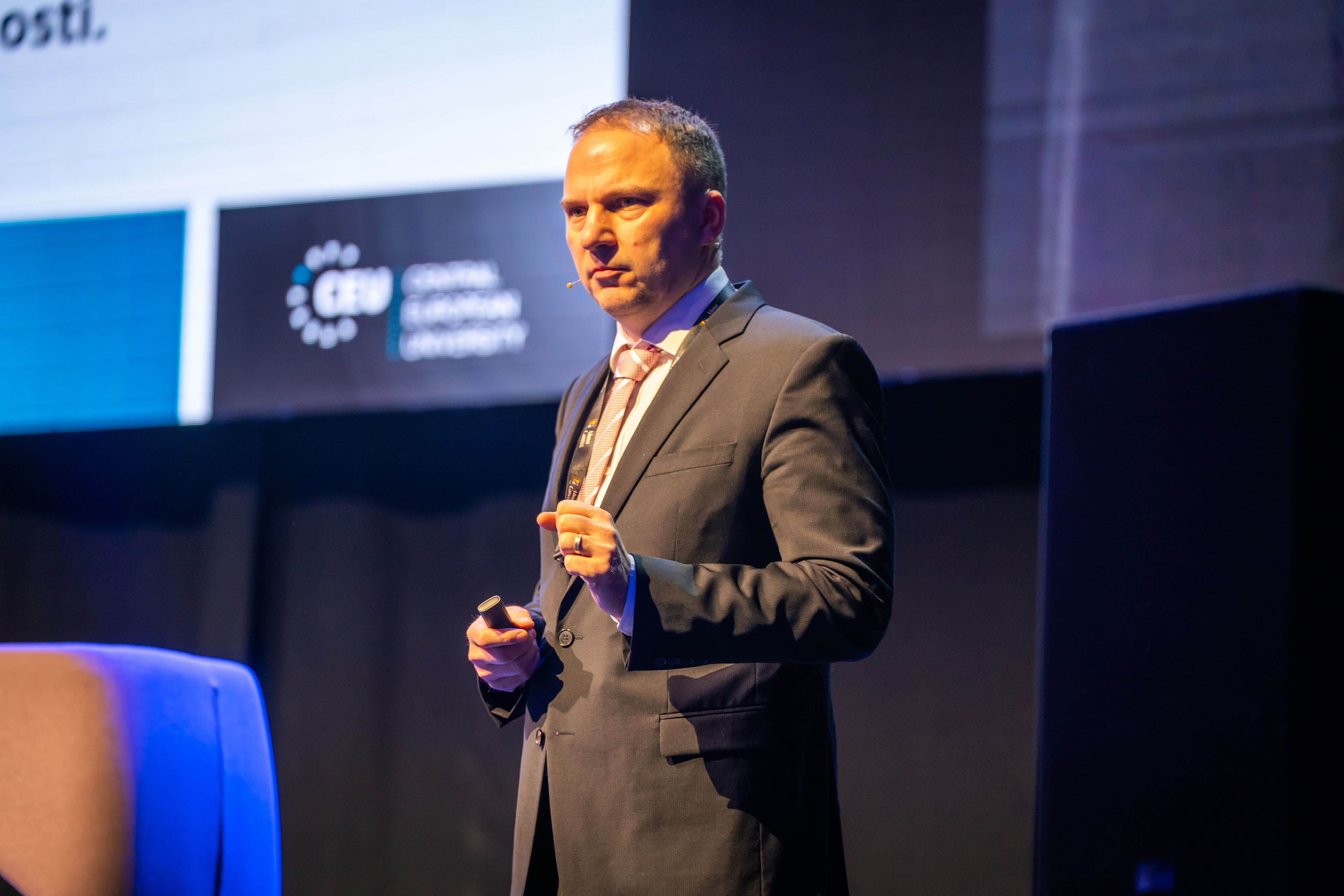
The Alma Inclusive 2026 Conference showed that the future of the labour market will not belong to companies that look for “perfect” people, but to those that learn to work with real people – including those with disabilities. Martin Kahanec’s opening presentation, “Transformation of the Labour Market”, opened the conference with a powerful message: inclusion is both a moral and an economic imperative, not an optional add-on.
Labour market changes and rising tensions
In his presentation, Kahanec showed how demographic trends – low birth rates, an ageing population and a shortage of qualified workers – are creating major challenges in most EU countries. On top of this come overlapping crises: economic slowdown, uncertainty, the impacts of the pandemic, conflicts and negative attitudes towards migrants, all of which narrow the room for manoeuvre for companies and public institutions. In this context, the question of how to better involve people at the margins of the labour market is becoming increasingly urgent.
Exclusion of people with disabilities as a weakness of the labour market
A key theme of the presentation was the exclusion of people with disabilities. Kahanec stressed that this is not a marginal social issue, but a structural weakness of the labour market.
In the context of an ageing population, exclusion turns into an economic loss – a loss of skills, experience and tax revenues – and becomes a test of society’s ability to adapt to demographic realities.
In Slovakia, the data show a high proportion of people with disabilities and, at the same time, persistently low employment of this group, even during periods of economic growth. According to Kahanec, this is the result of institutional settings – an emphasis on benefits, sheltered workshops and long-term sick leave – rather than on supposedly “unattainable” individual abilities. This creates an exclusion trap: a closed subsystem in which the employment of disability pensioners reacts very little to the economic cycle.
Low trust and expectations as hidden barriers
CELSI research cited by Kahanec points to low trust in institutional coordination – families become a protective mechanism against further system failure, and their caution is rational rather than cultural. The greatest barrier to the integration of people with disabilities is therefore not their health status, but the lack of a support system in the open labour market and the low expectations of those around them and of the individuals themselves. These expectations lead to people “pushing themselves out” of the labour market and create a self‑fulfilling prophecy of exclusion.
Inspirations from abroad: Norway and other countries
In his presentation, Martin compared the situation in Slovakia with more successful countries, especially Norway. While in Slovakia the issue has mostly been addressed outside the open labour market – through formal status, sheltered workshops and social enterprises – Norway has focused on work ability, return to work and employer responsibility, supported by specialised institutions.
In Norway, returning to work after a health problem is a standard part of a career path, and the employer is an active player in vocational rehabilitation. The result is higher employment of people with disabilities without massive segregation of jobs, whereas Slovakia keeps many people trapped in a “semi‑market”. The difference does not lie in the health of the population, but in the approach and the design of the system.
Employer concerns and reality
The presentation also touched on the perspective of employers. Studies from IZA World of Labor and other research show that fears about low productivity of people with disabilities are often unfounded. With appropriate job design, their performance can be comparable to that of other employees, and turnover tends to be lower rather than higher.
Many of the necessary workplace adjustments are usually inexpensive or even free – most often involving flexibility in working hours and work organization. The biggest investment is therefore not the budget, but a change in mindset. Kahanec also presented the concept of job carving – breaking down a job into specific tasks and recombining them “to measure”, which makes it easier to match a worker’s abilities with the employer’s needs and reduces risk on both sides.
Three steps towards integration
The key conclusion of his presentation was three recommendations:
participation – to first believe that work is possible,
employment – to overcome entry barriers,
job quality – to gain access to sustainable and decent jobs.
Kahanec also clearly defined the roles of the different actors:
Employers should start with pilots and experiments, cooperate with expert partners (often NGOs), and focus on potential, not diagnosis.
Public authorities should draw inspiration from successful return‑to‑work models, measure outcomes (successful integration) rather than just the number of benefit recipients, and reduce risk for employers by providing professional support.
The non‑profit sector should build trust, support people throughout the integration process, and connect actors so that support is continuous.
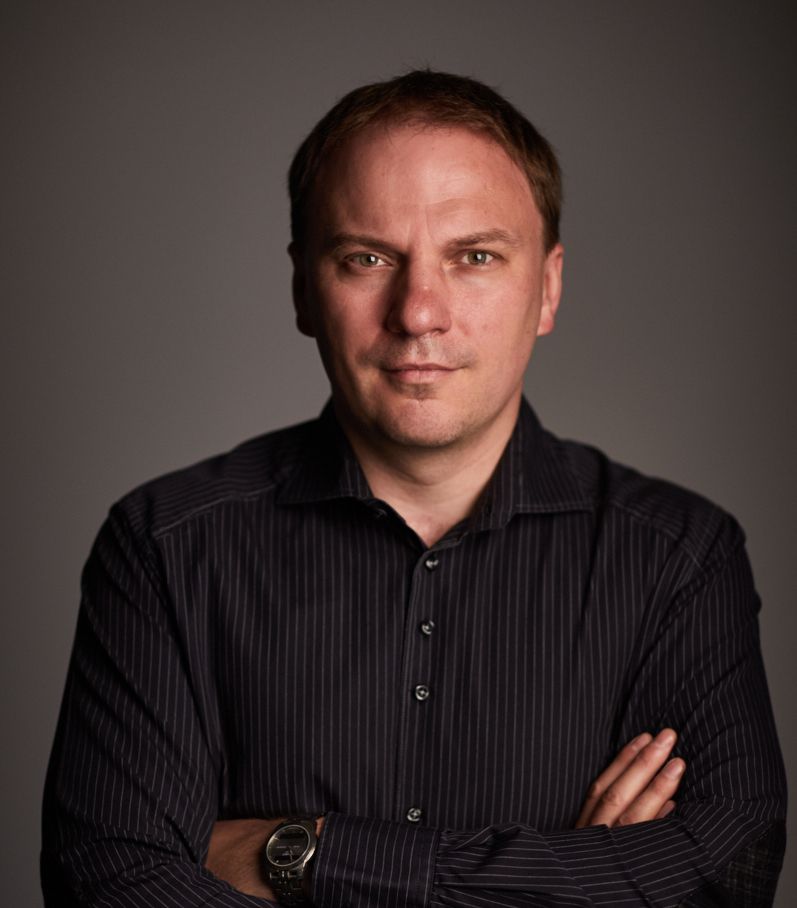
Martin Kahanec is the founder and Scientific Director of the Central European Labour Studies Institute (CELSI), a member of the Group of Chief Scientific Advisors to the European Commission (from 5/2025), and the 2025 ESET Science Award laureate in the main category “Outstanding Personality of Science” in Slovakia. He is a professor at the Department of Public Policy at the Central European University (CEU) in Vienna, where he also serves as Director of the Shattuck Center for Human Rights.
Previously, he was Dean of the CEU School of Public Policy in 2017–2019 and 2020–2021, and headed the Department of Public Policy in 2021–2023. Since 2015, he has also been affiliated with the University of Economics in Bratislava. Martin is a member of the Government Council of the Slovak Republic for Science, Technology and Innovation (since 2022) and a leading figure of the European academy of sciences Academia Europaea. His main research areas include economic policy, labor and population economics, migration, EU mobility, integration and ethnicity, inequalities, and reforms of European labour markets.
Illustration foto: Adam Kováč https://www.adamkovac.com

